The most forward-thinking luxury properties now understand that sustainability enhances rather than limits the guest experience. Resorts like The Brando in French Polynesia set the standard. Powered by solar energy and a pioneering deep seawater cooling system, this private-island retreat produces its own water, composts waste, and grows a notable percentage of its own food. Yet it never skimps on comfort as one of the world’s most coveted destinations. Guests still dine on French-Polynesian cuisine crafted by Michelin-trained chefs, lounge in overwater villas, and snorkel in a pristine lagoon protected by the private island resort’s own scientific foundation.
That balance of maintaining indulgence while operating responsibly is what defines eco-luxury today. Ellis says the best properties succeed because “they know where it makes sense to go green and where comfort shouldn’t be sacrificed. You still need beautiful rooms, wonderful staff, amazing food, and those little touches like welcome towels and upscale amenities, but everything should be done consciously and with care. Products should be local and cleanly made. What can be reusable should be reusable.”
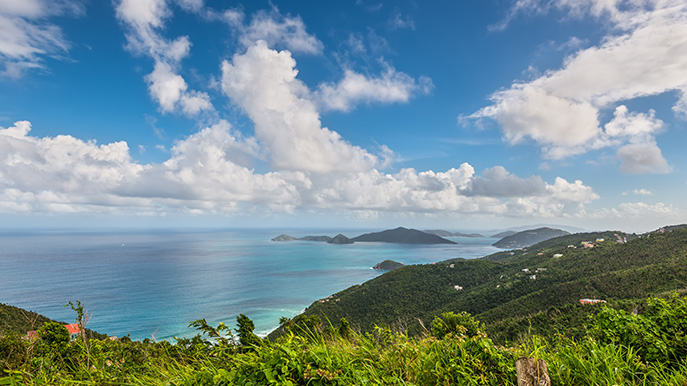
Across the world, new eco-luxury resorts are proving that sustainability and sophistication can coexist naturally. On Guana Island in the British Virgin Islands, just 35 guests at a time share an 850-acre private nature preserve. Hand-built cottages tuck into hillsides to preserve the island’s natural contours, while most of the terrain remains undeveloped and is an ecological sanctuary for sea animals, iguanas, and marine reefs. The island’s Guana Science Programme has reintroduced several native and once-common species, and the resort donates to local community charities. It’s a model of environmental and community stewardship so natural that some of Ellis’s clients don’t even realize how eco-friendly it is, having sacrificed no comforts in the name of sustainability.
Africa’s Wilderness lodges, meanwhile, have long championed a sustainable approach to safaris. Solar-powered camps in Botswana and Namibia use advanced water recycling systems and support rewilding initiatives that help local communities thrive. “Wilderness proves that bucket-list destinations and luxury don’t have to mean excess, but can focus on access … to nature, to wildlife, to purpose.” Brands like these also demonstrate that eco-luxury is already evolving from sustainable travel to regenerative travel, healing and restoring what has suffered from human impact.
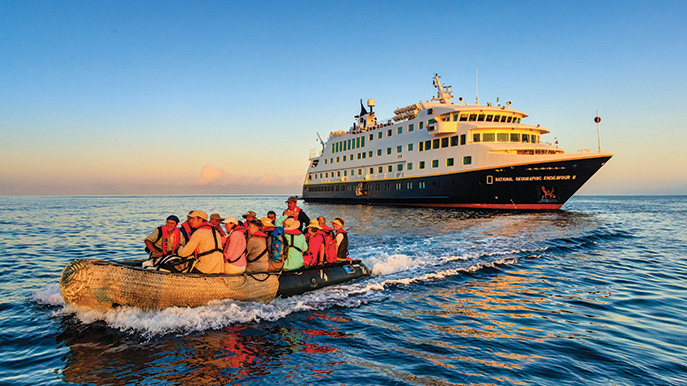
Even on the water, a new generation of expedition vessels is reshaping eco-luxury cruising. Lindblad Expeditions–National Geographic offers small-ship voyages that fund scientific research and conservation, inviting sailors to engage directly with naturalists and photographers. Private yacht charters are also embracing sustainability at sea. Eco-engineered hybrid vessels now allow guests to island-hop with near-silent propulsion and reduced emissions. Onboard chefs can focus on seasonal, locally sourced menus, while conscious charter crews receive environmental-stewardship training to protect marine ecosystems.
Travel with Intention
High-end travelers increasingly value experiences that feel restorative and responsible. Hotels and tour operators are responding rapidly by investing big in renewable energy, community partnerships, and conservation programs, so there’s no shortage of options. Brands like Six Senses, for instance, have achieved B-Corp certification by embedding sustainability into every guest experience, from zero-waste kitchens to reef-restoration projects. Customized operators such as Swain Destinations, another of Ellis’s recommendations, extend this ethos to entire journeys with bespoke itineraries across Australia, New Zealand, and Africa, emphasizing low-impact lodgings and authentic cultural connections. Katie Manly, Swain’s Vice President of Sales and Marketing shares “our goal is that each and every single itinerary that we craft alongside our Advisor partners will impact our destinations positively across multiple pillars of support. We hand select our partners on the ground for their commitment to supporting their local communities, conservation of local wildlife, preservation of the landscapes they are custodians of, and/or to finding sustainable practices that enable them to contribute to all the above while also providing an authentically local experience. In addition to our discerning partner selection within our destinations, we donate to wildlife conservation programs and sanctuaries, such as Care for Wild Rhino Sanctuary in South Africa and Koala Clancy Foundation in Australia, which are just two of the programs that are very close to our hearts.”
As the world’s most exclusive properties continue to evolve, eco-luxury travel stands not as a trend but as the new definition of indulgence. “Luxury travel has always been about making people feel special,” Ellis says. “Now it’s also about helping them feel responsible.”
Contact us to start planning your next adventure!
Plan Your Trip
Harper’s Station
11309 Montgomery Road
Suite B
Cincinnati, Ohio 45249
513-247-1100